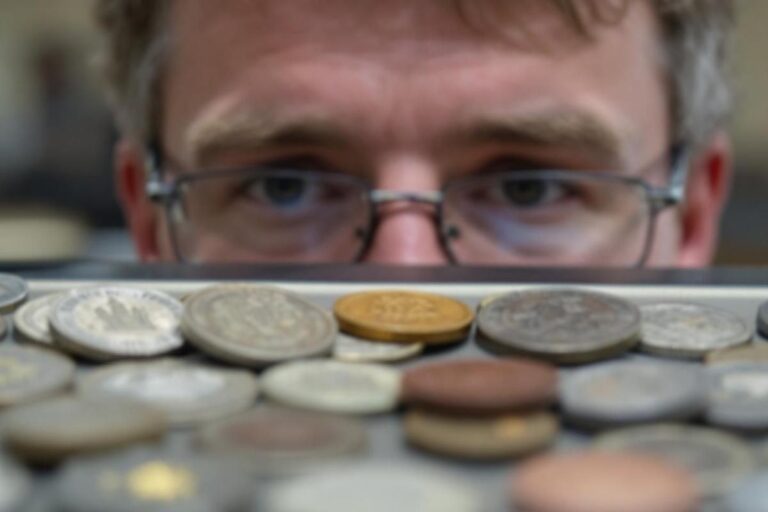

Numismatic collecting in America traces its roots far deeper than many realize, beginning with Native American traditions long before European colonization. When early peoples migrated from Siberia between 24,000 and 21,000 years ago, they brought collecting practices that served cultural and spiritual purposes. These hunter-gatherers engaged in systematic foraging and accumulation patterns that extended beyond survival, laying foundational collecting behaviors that would evolve into modern coin appreciation.
European colonists introduced formal numismatic traditions to the New World, bringing ancient Roman coins and contemporary European currency. Christopher Columbus and his entourage carried coins from their homelands in 1492, establishing the first connection between Old World collecting practices and American soil. The establishment of mints in Mexico City (1535), Lima (1568), and Potosí (1573) created the infrastructure for New World coinage that would eventually captivate American collectors.
Early American numismatic traditions and educational foundations
Colonial America’s first coin enthusiasts emerged from educational institutions where classical studies required ancient coin examination. Harvard College, founded in 1635, and William and Mary College, established in 1693, housed faculty trained in England’s academic traditions. These educators naturally became America’s first numismatic experts, using coins to enhance their teaching of classics, Biblical studies, and world history.
Notable early collectors included Reverend John Harvard, Reverend Henry Dunster, and Reverend Thomas Hooker, who represented the first wave of American numismatists during the early 17th century. High schools like Boston Latin School (1635) and Hartford Public School (1638) employed masters such as Ezekiel Cheever, who likely brought ancient coin collections from England to support their Latin and Greek instruction.
Colonial coinages provided abundant collecting opportunities for these early enthusiasts. The Massachusetts Bay Colony produced distinctive pieces including NE pieces, Pine Tree coins, Willow Tree coins, and Oak Tree coins. Other collectible colonial issues included Sommer Islands “Hogge Money,” Lord Baltimore coinage, American Plantation Tokens, and Virginia Halfpennies. These diverse currencies circulated alongside foreign coins, creating a rich numismatic landscape that attracted both scholars and curious citizens.
Pierre Eugène Du Simitière’s collection represents one of America’s first recorded coin auctions, sold posthumously in 1785. His diverse holdings demonstrated the broad collecting interests of 18th-century American numismatists, who often pursued natural history specimens, antiques, and curiosities alongside their coin collections.
Federal period expansion and systematic documentation
The establishment of the United States Mint in 1792 revolutionized American coin collecting by providing regular federal coinages that enabled systematic “coin type” set assembly. Early Federal Period collectors could acquire experimental pieces including Continental Currency, Fugio Coppers, and state coinages from Connecticut, Massachusetts, Vermont, New Jersey, and New York.
Distinguished 19th-century collectors emerged as coin appreciation gained sophistication and documentation. Notable figures included Robert E. Bache, Adam Eckfeldt, Lieutenant Colonel Aaron Levy, Robert Gilmor Jr., Philip Hone, and Dr. Tobias Watkins. These collectors maintained impressive coin cabinets crafted by skilled period cabinetmakers, reflecting the hobby’s growing prestige and organization.
| Period | Key Developments | Notable Collectors | Significant Coins |
|---|---|---|---|
| Colonial (1600s-1700s) | Educational foundations | Rev. John Harvard, Rev. Henry Dunster | Massachusetts Bay Colony coins |
| Federal (1790s-1850s) | U.S. Mint establishment | Robert E. Bache, Adam Eckfeldt | Early Federal coinages |
| Commercial (1857-1900s) | Professional coin dealing | Money exchange brokers | Complete type sets |
The late 18th century witnessed the rise of American historical consciousness through institutions like the American Academy of Arts and Sciences (1780) and the Massachusetts Historical Society (1791). These organizations fostered collecting of earlier American coinages and foreign circulating pieces as historical artifacts, elevating numismatics from mere hobby to scholarly pursuit.
Commercial transformation and modern collecting approaches
The Coinage Act of 1857 marked a pivotal transformation in American numismatics by ending foreign coins’ legal tender status. This legislation forced money exchange brokers, who had operated throughout the original colonies since colonial times, to transition into professional coin dealers. These brokers had maintained complex exchange rate systems for British pounds sterling and Spanish silver and gold, but the new law simplified currency and created commercial opportunities.
Former exchange brokers possessed unique advantages in the emerging coin market, having cherry-picked premium specimens from foreign currencies for years. Their established urban offices and customer relationships provided perfect foundations for America’s first professional coin dealerships, establishing commercial numismatics as a legitimate business sector.
Modern American collectors pursue diverse approaches reflecting personal interests and investment goals :
- Hobbyist collectors focus primarily on pleasure without profit expectations
- Investment collectors anticipate value appreciation over time
- Patriotic collectors concentrate on nationally significant pieces
- Specialist collectors target specific themes, countries, years, or mint marks
- Completist collectors seek comprehensive type set examples
Louis E. Eliasberg remains the only collector to assemble a complete set of known United States coins, demonstrating the ultimate achievement in American numismatic collecting. His accomplishment illustrates both the depth of American coinage and the dedication required for comprehensive collecting.
Contemporary evolution and cultural impact
Modern American coin collecting has evolved from the “Hobby of Kings” to the “King of Hobbies,” attracting millions of participants across all social strata. The 50 State Quarters program exemplified this democratization, with the U.S. Mint estimating 147 million participants, making it the most successful coin program in American history.
Professional grading services revolutionized the hobby during the 1980s by standardizing condition assessment and eliminating many counterfeits. The American Numismatic Association’s 70-point grading scale, ranging from 1 (poor) to 70 (mint state), provides consistent evaluation standards that enhance market confidence and facilitate transactions.
Educational resources continue expanding through institutions like the Edward C. Rochette Money Museum, which showcases monetary history and rare specimens. The American Numismatic Association offers comprehensive educational programs including seminars, publications, lending libraries, and digital resources that support collectors at all expertise levels.
Contemporary American numismatics maintains strong community aspects through local clubs, regional shows, and online forums that connect collectors nationwide. The first international convention in Detroit (1962) attracted an estimated 40,000 attendees, demonstrating the hobby’s remarkable growth and enduring appeal in American culture.