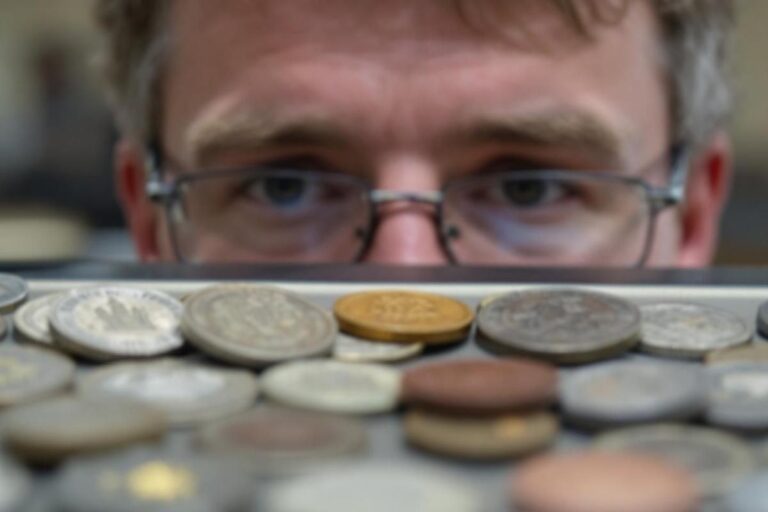

The coin grading system serves as the foundation for determining a coin’s condition, authenticity, and market value. This standardized approach revolutionized numismatics by providing collectors and dealers with consistent evaluation criteria. Professional grading services transformed the hobby from subjective assessments to objective standards, creating confidence in the marketplace. Understanding these grading principles enables collectors to make informed purchasing decisions and accurately assess their collection’s worth.
How coin grading scales determine value and condition
The modern grading system traces its origins to Dr. William Sheldon’s innovative 1949 scale, initially developed for Large Cent pricing in his groundbreaking work “Penny Whimsy.” This numerical system ranges from 1 to 70, where higher numbers represent superior condition and approach perfection. Sheldon’s revolutionary concept directly linked grade numbers to pricing structures, establishing that a Good 4 specimen would cost $4 while a Fine 12 would command $12.
The scale encompasses 18 actual numerical grades distributed across 12 adjectival categories. The lowest grades include Poor 1, Fair 2, and Almost Good 3, representing heavily worn coins with barely discernible details. Good grades 4 and 6 show most lettering despite heavy circulation wear. Very Good encompasses grades 8 and 10, displaying more detail while maintaining clear evidence of extensive use.
Fine grades 12 and 15 exhibit crisp lettering and digits with visible circulation wear extending into recessed areas. Very Fine spans grades 20, 25, 30, and 35, showing wear primarily on elevated design elements. Extremely Fine grades 40 and 45 represent specimens where wear may not be immediately apparent but becomes visible under careful examination, often retaining traces of original mint luster.
| Grade Range | Category | Characteristics |
|---|---|---|
| 1-3 | Poor to Almost Good | Heavy wear, barely discernible details |
| 4-10 | Good to Very Good | Visible lettering, extensive circulation wear |
| 12-35 | Fine to Very Fine | Clear details, wear on high points |
| 40-58 | Extremely Fine to About Uncirculated | Minimal wear, possible mint luster |
| 60-70 | Mint State | No circulation wear, pristine condition |
Professional grading services and authentication standards
Third-party grading services emerged to address the need for standardized evaluation and authentication. The ANA Certification Service launched in 1972, followed by the Professional Coin Grading Service in 1986 and the Numismatic Guaranty Corporation in 1987. These organizations pioneered encapsulation technology, securing graded coins in tamper-evident holders with detailed condition assessments.
The development of consensus grading methods initially faced skepticism but gained acceptance through consistent application. Professional services implemented an 11-point Uncirculated scale spanning MS-60 through MS-70. MS-60 specimens typically display numerous contact marks and weak strikes with poor visual appeal, while MS-70 represents near-perfect condition achievable primarily in modern issues.
In 2007, Certified Acceptance Corporation revolutionized the market by reviewing previously graded coins from established services. CAC places distinctive green stickers on coins with above-average eye appeal and gold stickers on potentially under-graded specimens. Despite initial market resistance, CAC-approved coins now command significantly higher prices, validating their quality assessment standards.
Recent innovations include NGC’s 2022 introduction of NGCX, a 10-point grading scale designed for modern uncirculated coinage. This system maintains compatibility with other collectible grading standards, including sports cards. Simultaneously, CAC announced plans to begin grading raw coins independently, creating additional competition in the professional grading marketplace.
Key factors influencing coin evaluation beyond numerical grades
Multiple elements determine coin value beyond basic numerical assignments. Strike quality significantly impacts desirability, as sharply struck coins command premiums over weakly impressed specimens within identical grades. Luster characteristics vary dramatically between mint state coins, affecting eye appeal and market acceptance. Original skin and natural toning enhance value, while artificial coloration reduces desirability.
Scarcity based on mintage figures creates fundamental value differences between common and rare dates. Provenance from notable collections adds historical significance and premium pricing. Supply and demand dynamics within specific series influence individual coin values regardless of technical grade assignments.
Coins exhibiting problems receive “details” grades rather than straight numerical designations. Common issues include :
- Cleaning damage from harsh chemical treatments or abrasive materials
- Environmental damage from moisture, pollution, or storage conditions
- Surface alterations including scratches, dents, or repair attempts
- Artificial toning or color manipulation
- Filed rims or other physical modifications
Professional services assign two-digit problem codes for identification purposes. Code 92 indicates cleaning, 95 represents scratches, 97 denotes environmental damage, and 98 signifies general damage. Details-graded specimens receive verbal descriptors like “EF Details” or “Uncirculated Details – Improperly Cleaned” without numerical assignments.
Market acceptance of problematic coins varies among collectors. Some accept details grades for key dates otherwise financially unattainable, while others prefer lower-grade problem-free examples. Advanced numismatists often reject any specimens with identified issues, focusing exclusively on original, unimpaired coins for their collections.