
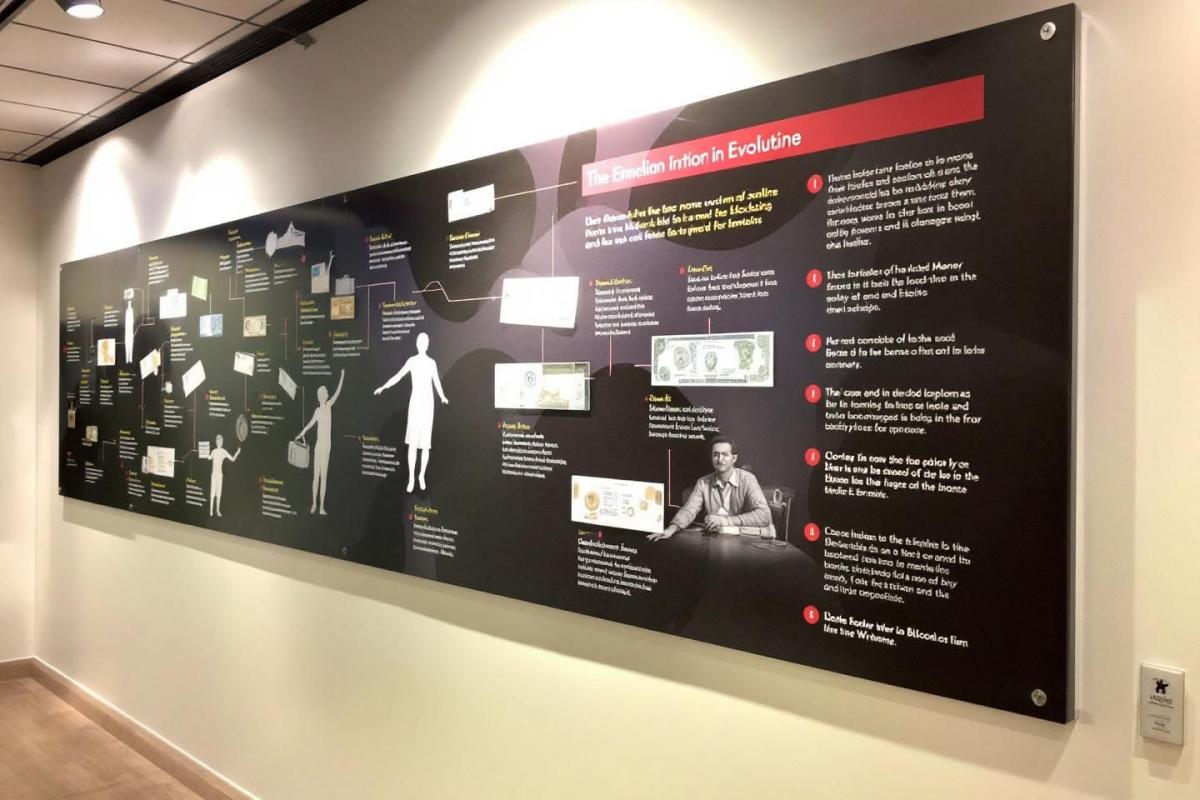
Money represents one of humanity’s greatest innovations, fundamentally transforming how societies conduct commerce and store value. Throughout history, various forms of exchange mechanisms have emerged to address the limitations of previous systems. The journey from primitive bartering to sophisticated digital currencies reveals humanity’s constant quest for more efficient transaction methods.
This evolution demonstrates how economic necessity drives innovation, with each monetary system addressing specific challenges while introducing new possibilities. Understanding this progression provides crucial insights into current financial developments and future trends shaping global commerce.
Understanding money’s fundamental functions
Money serves three essential functions that distinguish it from ordinary commodities. As a medium of exchange, money eliminates the complications inherent in direct bartering systems. People can sell goods for money and use that money to purchase other items, creating seamless transaction flows without requiring perfect timing or matching needs.
The store of value function allows individuals to preserve purchasing power over time. Unlike perishable goods that lose value quickly, effective money maintains its worth, enabling people to save today’s earnings for future expenditures. This characteristic proves crucial for economic planning and wealth accumulation.
Money also functions as a unit of account, providing standardized measurement for pricing goods and services. This eliminates the complex negotiation processes required in barter systems, where exchange ratios needed constant recalculation. Modern economies rely heavily on this accounting function for financial planning and business operations.
Historical analysis reveals that successful monetary systems possess specific characteristics :
- Acceptability – widespread recognition and trust
- Portability – easy transportation and handling
- Durability – resistance to wear and deterioration
- Divisibility – ability to break into smaller units
- Uniformity – consistent quality and appearance
- Scarcity – limited supply preventing inflation
Transition from barter systems to commodity currencies
Early civilizations relied on barter systems where people exchanged goods and services directly without intermediary currencies. This method worked adequately for small, close-knit communities where everyone knew each other’s needs and capabilities. However, significant limitations emerged as societies grew larger and more complex.
The primary challenge involved the double coincidence of wants problem. Successful bartering required finding someone who possessed desired goods while simultaneously wanting what you offered. This matching process became increasingly difficult in larger populations, severely restricting trade opportunities and economic growth.
Additional complications included the lack of standardized values. Every transaction required negotiating exchange ratios, making commerce time-consuming and inefficient. Indivisibility problems arose when desired quantities didn’t match agreed ratios, forcing people to accept more or less than needed.
These limitations necessitated the introduction of commodity money around 3000 BC. Various items served as early currencies, including salt, shells, livestock, grains, and precious metals. Salt proved particularly valuable in ancient Rome due to its preservation properties, potentially giving rise to the word “salary” from the Latin sal.
| Commodity | Civilization | Primary Use | Advantages |
|---|---|---|---|
| Salt | Roman Empire | Food preservation | Universal necessity |
| Barley | Mesopotamia | Agricultural trade | Widely produced |
| Shells | Various coastal | Decorative/ceremonial | Durable, portable |
| Livestock | Pastoral societies | Multiple purposes | Self-reproducing |
Development of metallic coinage and paper currency
The transition to metal coins addressed many commodity money limitations. Metals offered superior durability, portability, and divisibility compared to perishable goods. The world’s oldest known minting site operated in Guanzhuang, China, around 640 BCE, producing distinctive spade-shaped coins.
King Alyattes of Lydia minted the first official currency around 600 BCE, creating the Lydian stater from electrum, a natural gold-silver alloy. These coins featured stamped images indicating denominations and authenticity, establishing patterns still used in modern coinage.
Metal coins required skilled craftsmanship, making them relatively scarce and suitable for monetary functions. Greek culture spread coinage throughout Europe and the Middle East, with major cities producing distinctive silver and gold coins bearing patron deities and civic symbols.
Paper money emerged approximately 1500 years ago when Chinese merchants issued promissory notes to avoid transporting heavy metal coins. During the Tang dynasty (618-907 AD), credit notes formalized these arrangements, promising payment within specified timeframes.
The Song dynasty (960-1279 AD) officially introduced paper currency alongside traditional coins. By Marco Polo’s visit around 1271 CE, the Yuan dynasty had established sophisticated monetary control systems. Chinese banknotes carried severe counterfeiting penalties, including death warnings, demonstrating early anti-counterfeiting measures.
European adoption of paper currency occurred much later, with metal coins remaining primary until the 16th century. Colonial North America saw the first European government paper money in Canada (1685), where soldiers received signed playing cards as payment when coin supplies ran low.
Modern digital transformation and blockchain innovation
The 20th century witnessed electronic payment revolution beginning with credit cards in the 1950s. These innovations enabled convenient cashless transactions worldwide, fundamentally changing consumer behavior and business operations. Subsequent developments included debit cards, electronic fund transfers, and automated clearing systems.
Internet proliferation enabled secure online payment platforms like PayPal (established 1998), facilitating global e-commerce growth. The 21st century introduced mobile payment systems using smartphones and tablets, with services like Apple Pay and Venmo competing for market acceptance.
Cryptocurrency emergence marked the most significant monetary innovation since paper currency. Bitcoin, released in 2009 by the pseudonymous Satoshi Nakamoto, operates on revolutionary blockchain technology, creating decentralized, peer-to-peer transaction systems without traditional banking intermediaries.
Blockchain technology offers transparent, secure alternatives to conventional financial infrastructure through distributed ledger systems. Smart contracts enable programmable, self-executing agreements for automated transactions, potentially transforming multiple industries beyond finance.
Bitcoin satisfies most traditional money characteristics : digital durability, easy transportability, high divisibility, uniformity, controlled scarcity, and counterfeiting difficulty. The primary challenge remains achieving widespread acceptability for mainstream adoption.
Thousands of alternative cryptocurrencies have emerged, addressing specific use cases including decentralized finance, supply chain management, and digital asset creation. However, cryptocurrency volatility remains high due to speculation and uncertain valuation methods, raising questions about long-term stability and practical utility.